When Bonang Matheba took her place as Co-Host of the Miss Cosmo Grand Finale in Vietnam, her role extended far beyond commanding the broadcast. Across the evening, Matheba used fashion as a deliberate cultural instrument by wearing a sequence of custom looks drawn from Nigerian and South African fashion houses, each selected for their mastery of craft, structure and modern femininity. Together, the looks formed a cohesive fashion narrative that spoke to the design maturity of Made in Africa garments.
Here’s what she wore:
Biji La Maison


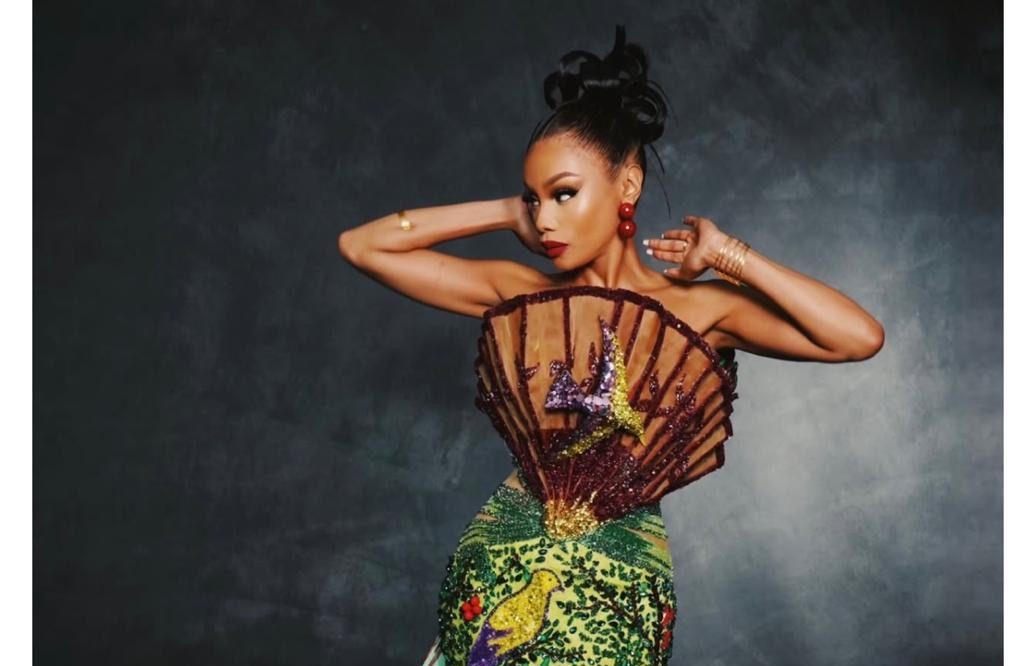
One of Matheba’s most striking style statements came through a sculptural creation by Biji La Maison. Known for its architectural silhouettes and couture construction, Biji La Maison specialises in statement pieces that blur the line between fashion and wearable art. Founded in South Africa, the house has built a reputation for bold forms, meticulous handwork and theatrical proportion. On Matheba, the exaggerated collar and structured bodice communicated authority and elegance in equal measure, reinforcing her presence as a commanding host.
Emagine by Bukola


Matheba also turned to Emagine by Bukola for more than one moment during the broadcast, underscoring the brand’s versatility and polish. Founded in Nigeria by designer Bukola Adepoju, the label is known for its refined silhouettes, intricate beadwork and disciplined balance between femininity and restraint. Emagine by Bukola has become a go-to on red carpets and pageant stages for precisely this reason, delivering garments that move seamlessly under lights and live broadcast conditions while maintaining memorable silhouettes, design detail and visual impact.
Sheyeoladejo


Completing the Nigerian couture edit was a design by Sheyeoladejo, a label known for its thoughtful approach to modern African luxury. Rooted in Nigerian craftsmanship, the brand often explores texture, embellishment and contemporary tailoring through a refined lens. On stage, the look delivered depth and nuance, reinforcing the idea that heritage can be expressed subtly, through materiality and cut rather than literal visual cues and references.
Rather than treating fashion as a sequence of costume changes, the looks functioned as a carefully curated portfolio of African design excellence.
As the evening unfolded in Vietnam, titles were awarded and crowns claimed. Yet quietly, through Bonang Matheba’s assured presence, African couture delivered its own elegant victory.