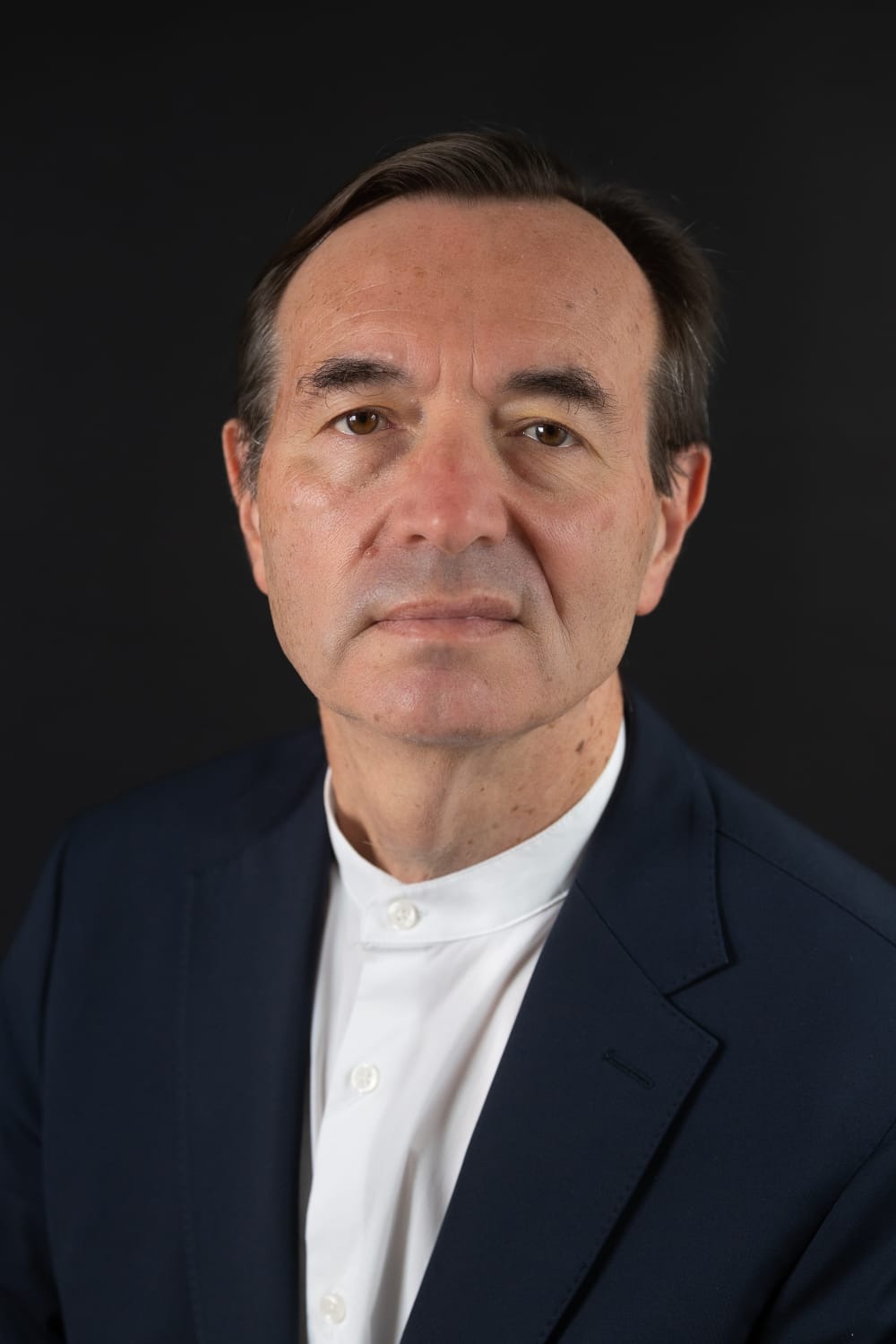
At the National Museum of 21st Century Arts (MAXXI) in Rome, South African sculptor Chris Soal unveiled Spillovers: Notes on a Phenomenological Ecology, a body of work that breathes, grows, and erodes like a living ecosystem. Curated by Cesare Biasini Selvaggi, the exhibition marks Soal’s Italian debut, running from 19 October to 27 November 2025 at Corner MAXXI.
Soal’s sculptural practice has long been rooted in transformation, of materials, of space, and of perception. “For me, Spillovers speaks to what happens when boundaries and binaries fail,” he explains. “When materials, ideas, or systems exceed containment. It’s a word that suggests both loss and possibility.” The works, composed of toothpicks, beer bottle caps, sandpaper, and concrete, embody that tension. They expand, cluster, and rupture, resembling growths or geological formations that have escaped their original purpose.
Created specifically for MAXXI’s Corner Gallery, the installation engages directly with the architecture. “Two things stood out immediately,” Soal says, “the high ceilings and the I-beams holding up the roof.” What might have been structural obstacles became part of the work’s logic. “An accumulation of sandpaper sanding discs wound around a pillar like a geological formation, reminiscent of a stalactite or termite mound,” he notes. “It allowed me to explore how termites use a tree to strengthen their column, architecture learning from nature.”

Here, Soal’s sculptural language is both sensory and phenomenological. The viewer doesn’t simply look; they inhabit. The installations fill one’s field of vision, altering perception and rhythm. His material choices, industrial yet tactile, operate on a fine line between the human and the elemental. “These materials tend to find me rather than the other way around,” he says. “They’re objects of daily use that suddenly reveal another life, a bottle cap bent like a cowrie shell, a sandpaper disc that looks like bark, toothpicks swirling in Fibonacci patterns. I’m drawn to that moment when something banal becomes strange.”
Soal’s practice is as much about discipline as it is about letting go. “I’m meticulous about preparation, the counting, sorting, sealing, but once the work begins to grow, I have to let go,” he admits. “Toothpicks splinter, glue resists, metal warps. Those resistances teach me where the form wants to go.”
That release extends beyond the material to the collective. The works in Spillovers took seven months to complete, involving Soal and seven other pairs of hands in the studio, alongside the wider network of makers, shippers, writers, and coordinators who support the practice. “No work of art ever stands alone, and neither does the artist,” he reflects. This dynamic of control and surrender, both personal and communal, forms the emotional undercurrent of his work. “It mirrors how we navigate the world. We build structures, but entropy is always quietly at work.”

The result is a series of sculptures that feel alive, not in imitation of nature but in resonance with it. “The works grow through aggregation and repetition, much like coral or sediment,” Soal explains. “They carry decay within them. Sandpaper wears, wood darkens, metal oxidises. I see them as participating in cycles of transformation rather than depicting them.”
Though Soal’s career has already reached major institutions such as the Brooklyn Museum, MACAAL Marrakech, and The Norval Foundation, Spillovers marks a turning point in tone. “Earlier works explored accumulation as structure; here I’m interested in leakage, in what escapes control,” he reflects. “The pieces for MAXXI lean into softness, porosity, and lightness more than monumentality. They’re less about imposing form and more about allowing it to unfold.”

That shift was also shaped by his long-standing relationship with curator Cesare Biasini Selvaggi. “Cesare has watched my work develop over six years and felt this was the right moment,” Soal shares. “There are pieces that beckon you in, like The Unfolding Ascension, which entirely envelops you as you approach it, fragmenting from the centre outward, or An Architecture of Attrition, which hovers over the viewer. I do hope it feels intimate.”
Soal’s material sensibility is inseparable from his South African environment. “Johannesburg gave me a sensitivity to surfaces and residues, it’s a city of improvisation where things are constantly repurposed,” he says. “Cape Town slows me down; it’s about light, horizon, and the sea’s erosion of stone. Both coexist in my work, one industrial and restless, the other elemental and cyclical.”
That duality extends to meaning. “Working with discarded materials becomes a way to speak indirectly about value and history, how beauty and power can emerge from what’s been overlooked or deemed expendable,” he reflects.

Ultimately, Spillovers is not only about materials but about sensitivity to time, texture, and transformation. “If the works succeed,” Soal says, “they should slow the viewer down enough to notice their own body in relation to the space, to feel how light and surface shift with each step.”
He then adds what might serve as the exhibition’s quiet thesis:
“I hope people leave with a sense that matter is alive, that what we touch also touches us, and that the boundaries between self, object, and environment are far more porous than we tend to imagine.”