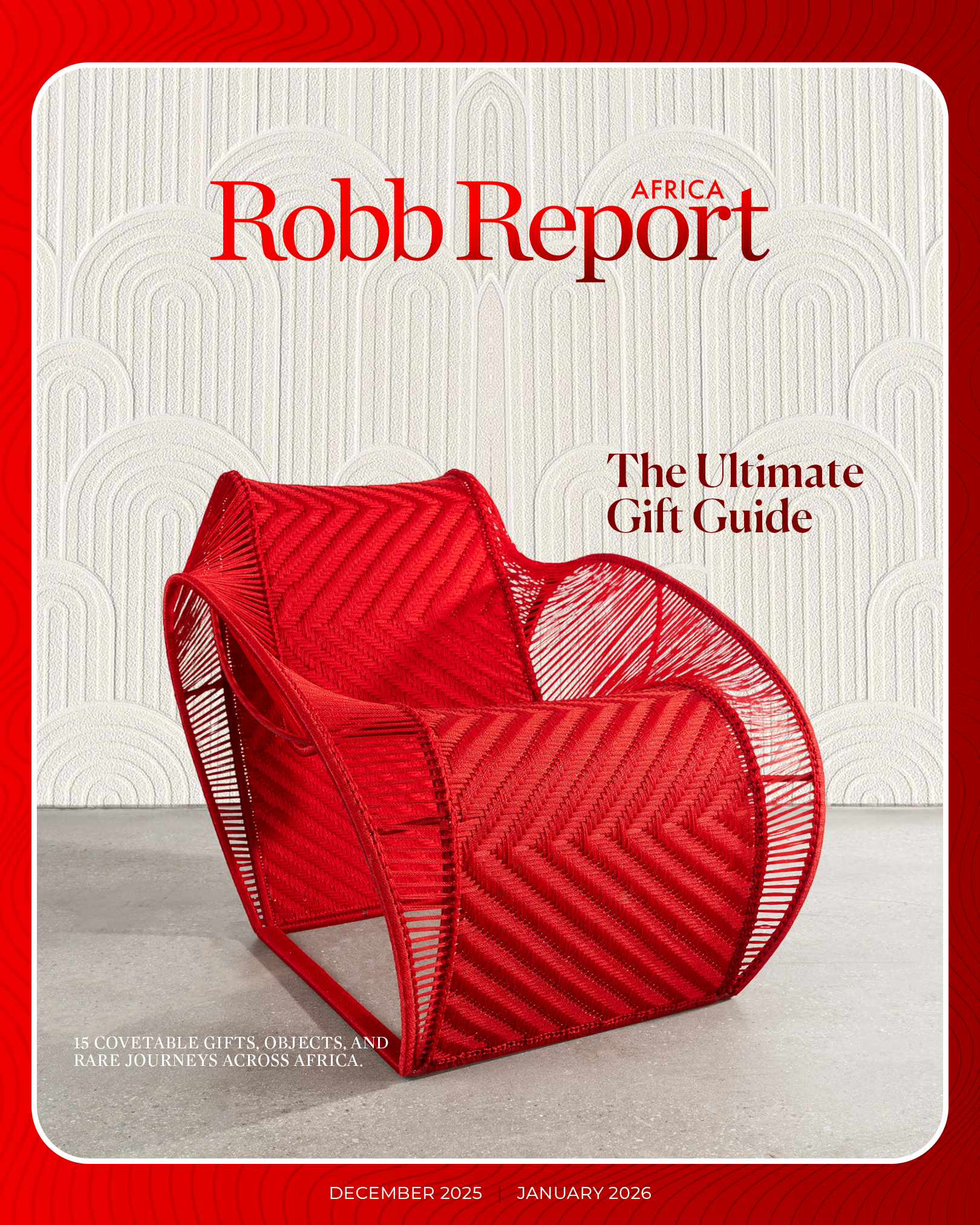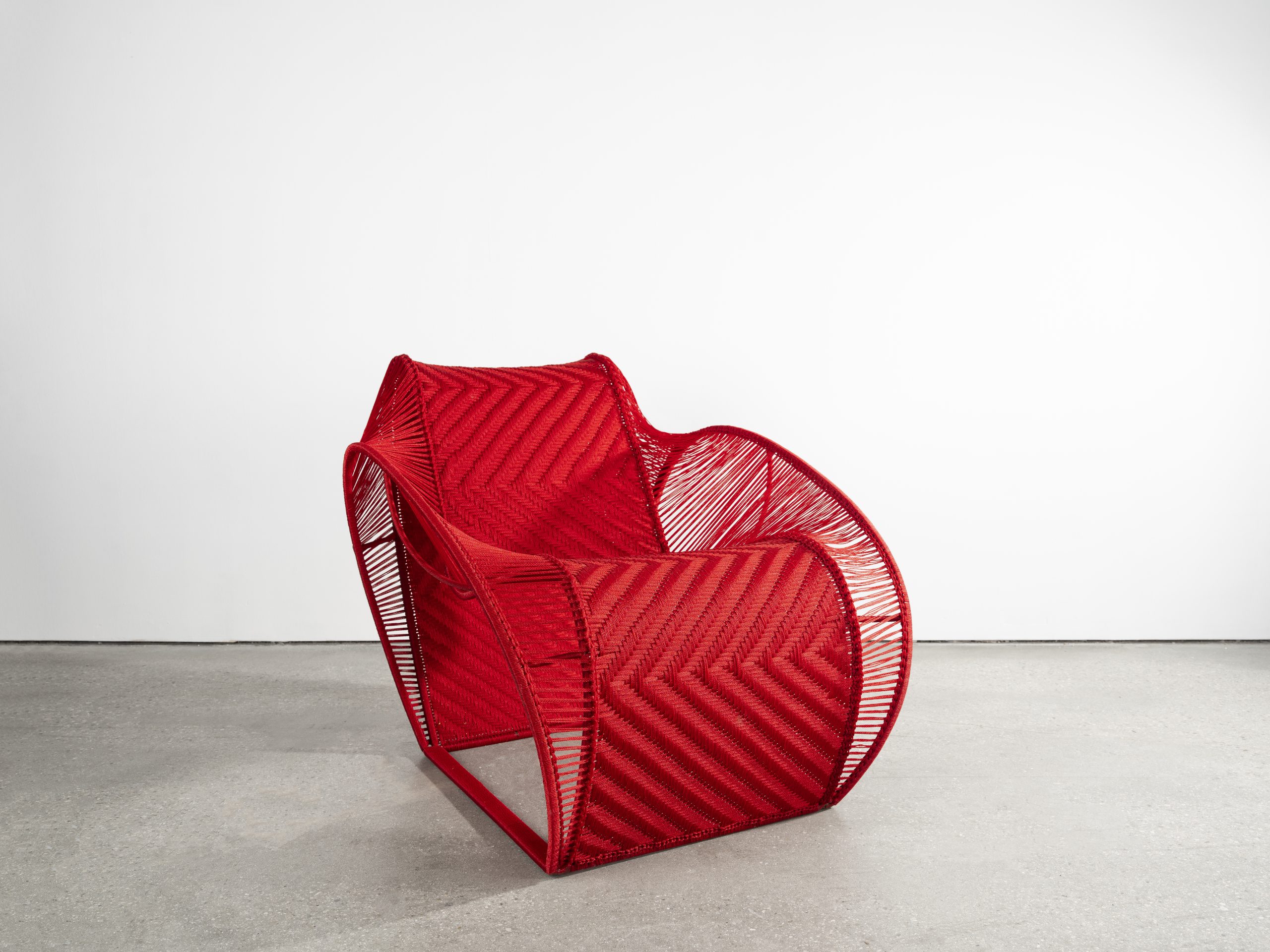
Fauteuil Dibi (2009) by Cheick Diallo is a landmark work of contemporary African design, where industrial materials meet refined handcraft. Constructed from steel and intricately woven nylon cords, the chair embodies Diallo’s distinctive language; rigorous, sculptural, and deeply human. Rooted in Malian design traditions yet unmistakably global, Fauteuil Dibi blurs the boundary between functional seating and collectible sculpture. Diallo’s work is widely regarded as foundational to Africa’s modern design canon, collected by leading institutions and sought after by serious collectors. For those building design-forward collections, this piece represents cultural significance, material intelligence, and enduring value. Fauteuil Dibi is both a functional object and an investment-grade design artefact.
Value: ZAR 221 000.00 / USD 13,200.00 (ex VAT and shipping costs)
Details
Specs / Technical / Materials:
Medium: Steel, nylon cords
Dimensions:
30.9 × 30 × 39.4 in.
(78.5 × 78 × 100 cm)
Designer:
Cheick Diallo
Year:
2009
Edition:
Variable edition
Lead Time / Acquisition Notes:
Available through Southern Guild.
Select editions may require production lead time.
How to Get It:
Gallery: Contact Southern Guild via email or use the form below.
Geography / Shipping:
White-glove international shipping available via Southern Guild’s specialist logistics partners.
Enquire Here

Nompumelelo Ntintili works at the intersection of visual identity, cultural narrative and creative direction. Her practice spans film, fashion, editorial and live performance, shaping how story and aesthetic language are communicated on screen, on stage and in culture. A Creative Director and Cultural Strategy Consultant, Sinxoto’s work is defined by intentionality. Whether developing character worlds for Netflix, guiding the visual direction of global luxury campaigns, or shaping narrative tone through editorial writing, her work reflects a considered and deeply cultural point of view. Former Fashion and Lifestyle Director across leading South African magazine titles, Ntintili has spent nearly two decades engaged in how African identity is styled, framed and seen.