A portfolio can contain more assets and still become less intelligent.
That is one of the tensions behind diversification. Adding property, companies or other investments may create the appearance of breadth, but a wider portfolio is not necessarily a stronger one if the owner cannot explain why each asset belongs there.
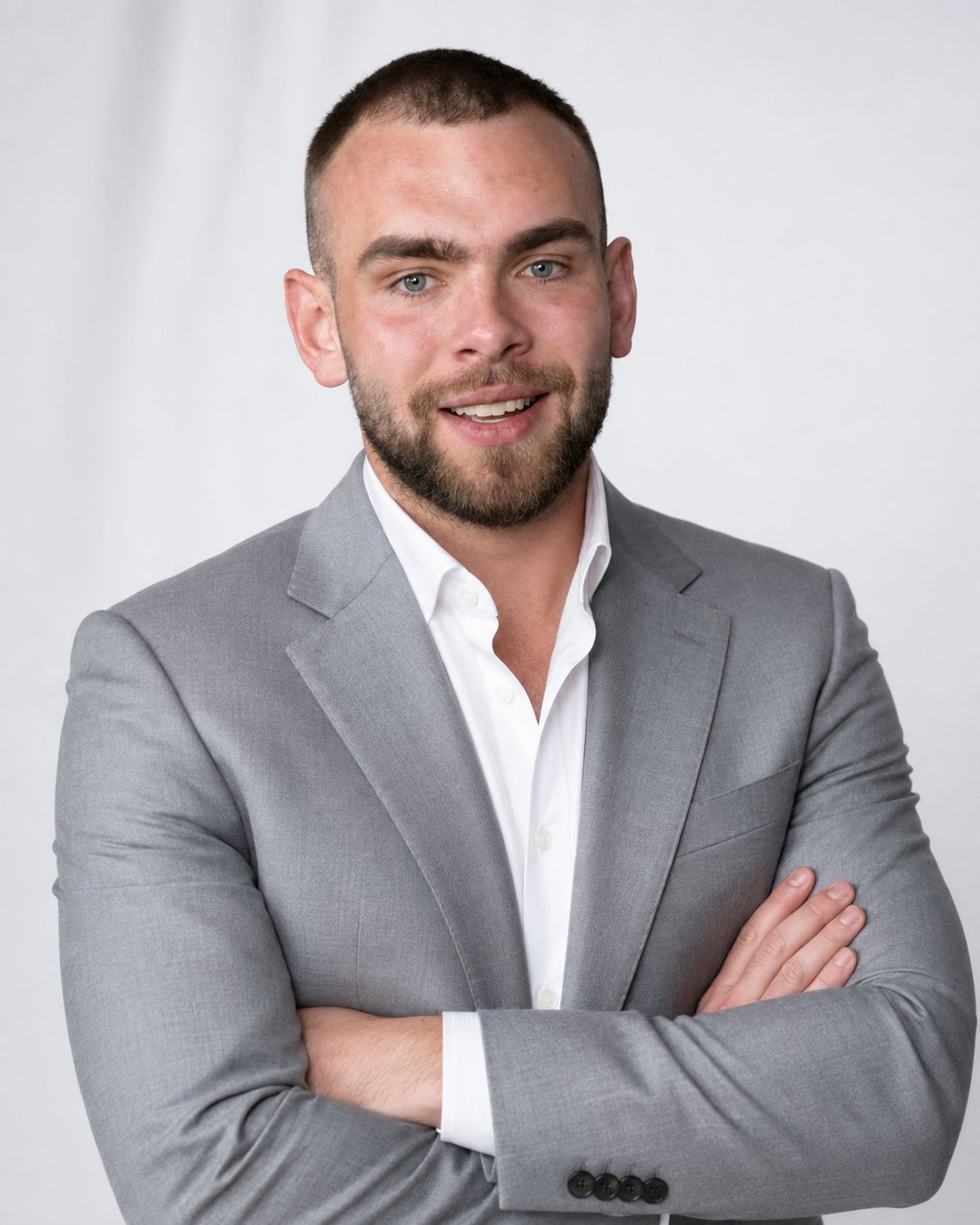
For Niklas Freihofer, that distinction is becoming increasingly relevant.
Much of Freihofer’s career has been built inside finance, where he has worked across brokerage, banking, CFDs and digital assets. Finance remains central to his professional identity, but his interests have expanded into real estate and potential company acquisitions.
The expansion is not simply about owning more.
Freihofer is increasingly interested in how different types of ownership serve different purposes. An operating company requires one kind of attention. Real estate requires another. An acquisition can create an opportunity to apply experience, relationships and commercial judgment, but it can also demand significant time and management capacity.
That makes diversification a question of structure rather than quantity.
For some investors, diversification is primarily about spreading capital across different asset classes. Freihofer’s approach is more operational. He is interested not only in where capital is invested, but in the role he expects to play after the investment is made.
That role can change dramatically depending on the asset.
A property may require selection, financing, management and patience, but it does not necessarily demand the same level of daily involvement as an operating business. A company acquisition can be entirely different. If the owner intends to influence sales, strategy or growth, the investment consumes more than capital.
It consumes attention.
That may be one of the most underestimated resources in an entrepreneur’s portfolio.
Founders often think carefully about how much money they are willing to invest, but less frequently about how much time, judgment, reputation and decision making capacity an opportunity will require after the transaction is complete.
A business can therefore look attractive financially while becoming expensive operationally.
Freihofer’s interest in company acquisitions is shaped by that reality. He has said he is most interested in businesses where he can do more than provide capital. The attraction is the ability to contribute to growth, open doors and apply his experience in sales, finance and company building.
That creates a higher threshold for ownership.
If an investment requires direct involvement, there has to be a clear reason for that involvement. Otherwise, the owner risks building a portfolio of companies that compete for the same limited resource: their attention.
Real estate plays a different role.
It gives Freihofer exposure to an asset outside the financial businesses that have defined much of his career, while allowing him to think about ownership through a different lens. The value of that diversification is not simply that real estate is different from finance. It is that the asset behaves differently and places different demands on the owner.
That distinction becomes more important as a portfolio grows.
A collection of investments can appear diversified while still being highly dependent on one person’s ability to remain involved in everything. The broader the portfolio becomes, the more important it is to understand which assets require operating intensity and which are expected to create value through a different combination of capital, management and time.
For Freihofer, this makes selectivity more important than accumulation.
Not every business needs to be acquired. Not every sector needs to be entered. Not every asset deserves the same amount of capital, and not every opportunity deserves direct involvement.
The question is not simply whether something can produce a return.
It is what role the asset is meant to play.
That is where a portfolio begins to become coherent.
One investment may provide exposure to a different asset class. Another may create an opportunity to apply operating experience. A third may offer a longer term store of value. The point is not that every investment needs to behave the same way, but that the owner understands why each one is there.
Freihofer’s move beyond finance is therefore less about abandoning the sector that built much of his experience than about expanding the ways in which he thinks about ownership.
Finance remains the foundation. Real estate introduces another form of asset ownership. Future acquisitions may offer opportunities to combine capital with direct operating experience.
What connects them is not simply diversification.
It is intent.
A larger portfolio can create more opportunity, but it can also create more complexity, more distraction and more responsibility. The advantage comes from understanding which assets deserve capital, which deserve attention and which should be allowed to operate without turning the owner into the centre of every decision.
For Niklas Freihofer, building beyond finance is therefore not a question of how many things can be owned.
It is a question of whether each asset has earned its place.
Robb Report Africa staff were not involved in the creation of this content.