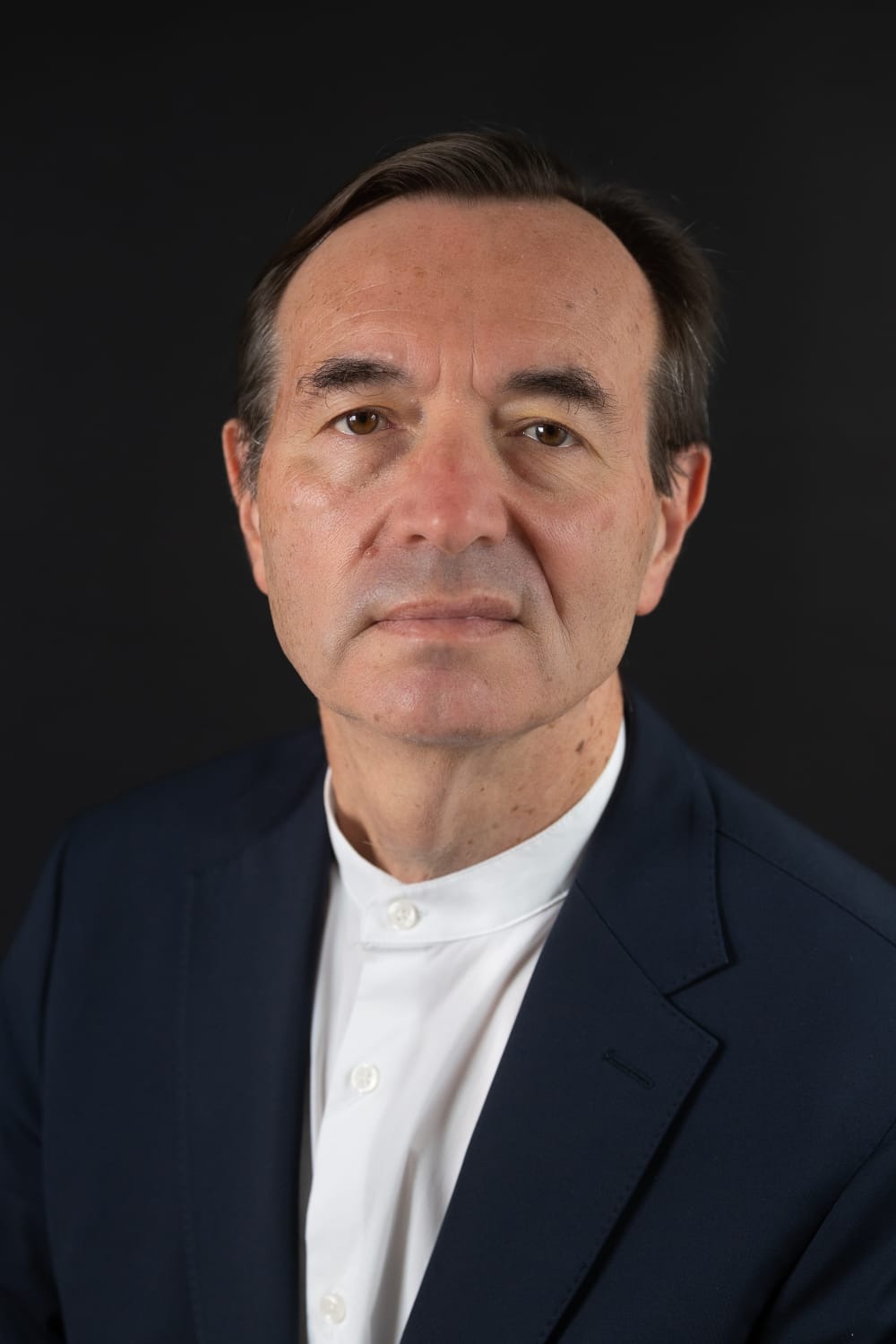
On a September evening in 2025, in the Tuscan coastal town of Pietrasanta, which is a place better known for its marble quarries and the sculptors who have worked them for centuries than for concert pianists, Igor Raykhelson stood on a small stage to accept the Villa Bertelli Prize.
The previous year, the same prize had gone to Andrea Bocelli.
Raykhelson, a Leningrad-born composer who has spent four decades moving between conservatories and concert halls, was collecting it not for a lifetime in classical music alone, nor for jazz, but for a body of work that has never quite fitted into either box. That refusal to be filed neatly is, as it turns out, the theme of his life. It shows up in his music. And it shows up, less predictably, in a Swiss trading house that supplies titanium to the world’s aerospace and medical industries, one that Raykhelson founded whilst he was making music.
Born in Leningrad in 1961, Raykhelson began piano at five and was admitted to the Rimsky-Korsakov Conservatory in 1976, where he studied classical and jazz piano side by side. This was deemed as an unusual pairing at a Soviet conservatory, and one that shaped everything that followed. While still a student he formed a jazz quartet, The Emerging Stars, which toured the Soviet Union to strong acclaim. In 1979, his family emigrated to New York, where he continued his studies under the noted teacher Alexander Edelman. He was eighteen, newly American, and already fluent in two musical languages that most conservatories insisted on keeping apart.
That dual foundation has defined his work ever since. Raykhelson has performed in jazz settings alongside musicians including Igor Butman, Eddie Gomez and Joe Lock, whilst maintaining an active career as a classical pianist in solo and chamber settings. His most significant creative partnership has been with the violist and conductor Yuri Bashmet, a collaboration that produced Raykhelson’s Jazz Suite for viola, saxophone, piano and orchestra — the work that, more than any other, defined his crossover style. Bashmet has called him a composer of rare command in both idioms. “Igor Raykhelson possesses superb mastery of both classical and jazz languages,” he has said. “His music surpasses that of many composers working in the crossover genre.”
The catalogue since has grown wide: a Violin Concerto in C minor, a Viola Concerto in A minor, the Little Symphony for Strings in G minor, Reflections for Violin, Viola and Strings, all recorded for the British label Toccata Classics, which has held up Raykhelson’s work as proof that the “third stream” tradition, the decades-old ambition to fuse jazz and classical composition into something genuinely new, rather than a novelty crossover act, remains a living practice rather than a historical footnote.
His music has now been heard in most of the halls that matter: Carnegie Hall, twice, along with Rose Hall, Avery Fisher Hall, the Moscow Philharmonic, the Great Tchaikovsky Hall and the St Petersburg Philharmonic, plus venues across Chicago, Cleveland, Los Angeles and San Francisco. He has also served as musical director of a clutch of prestigious festivals, including the Bahamas International Festival, the Mohonk International Festival, Moscow’s T-Festival, and Quarto Stagione in Pietrasanta, the town, coincidentally, where he would later collect his aforementioned Villa Bertelli Prize.
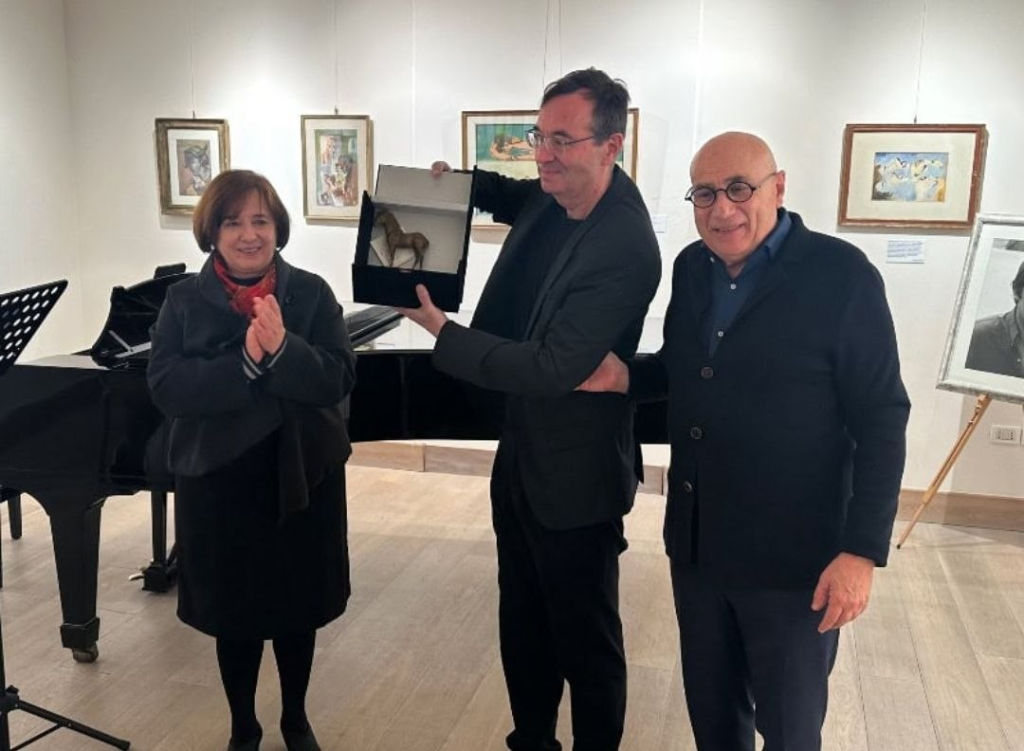
Marc Bouchkov , one of the most eclectic violinists of his generation, has put into words what makes Raykhelson’s music distinctive. After performing Raykhelson’s Piano Quintet at the 2026 Verbier Festival, Bouchkov described a “bittersweet melancholy” in the writing, “a poetic blend of harmonies that seem to exist somewhere between memory and dream, while always retaining an unshakable sense of strength and resilience.” Bouchkov is now the dedicatee of Raykhelson’s second violin concerto, still in progress. Not a bad way to spend a commission.cha
Here is where the story stops being only a music story. Raykhelson is founder of Interlink Metals & Chemicals, a Fribourg-based trading house founded in 1992 that has grown into one of the world’s largest distributors of titanium. This is the metal that goes into jet engines, surgical implants and the missiles that increasingly define geopolitics. Interlink operates across the United States, Asia and Europe.
However, that commercial reach has not gone uncontested. Interlink has been locked in a dispute with the Russian titanium producer VSMPO-AVISMA, arising from a 2020 settlement agreement and, as Raykhelson puts it “sham Russian criminal proceedings instigated by a kangaroo court” against him. Raykhelson has described the allegations as retaliatory and politically motivated, tied to the commercial disagreement rather than any wrongdoing.
Interlink had secured an eight-figure freeze against VSMPO, stemming from what iit characterises as a brazen breach of the settlement agreement the two parties signed six years before – : an agreement that barred either side from initiating litigation, criminal or otherwise, against the other. In the course of that litigation, a Swiss court found VSMPO to be de facto sanctioned.
Litigation of that kind rarely resolves quickly, with plenty of punches and counterpunches thrown. Although this one has dragged on round after round, the end is now in sight for Raykhelson, where the smart money is betting that he will be the unanimous winner.
He has served the company only as a consultant since 2012, a role shaped by the demands of his separate work in the music industry.
And he is not slowing down. Raykhelson continues to compose, perform and record, his catalogue published by Alphonse Leduc in Paris, registered with ASCAP and SACEM, and streaming on Apple Music and Spotify alongside the Toccata releases. He lives with his family not far from Pietrasanta, and from a stage where two careers fuse to represent the symphony of his successful life so far.