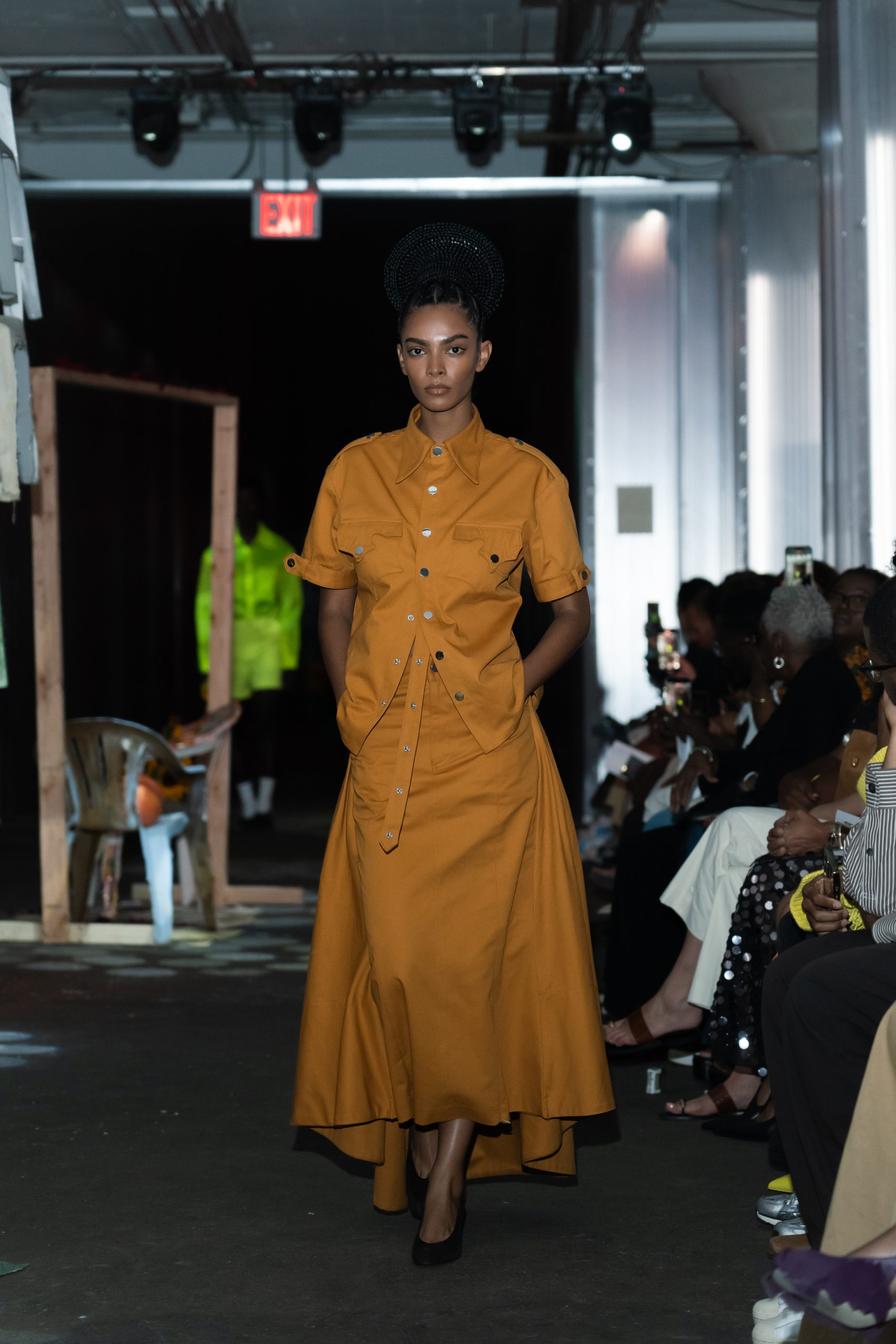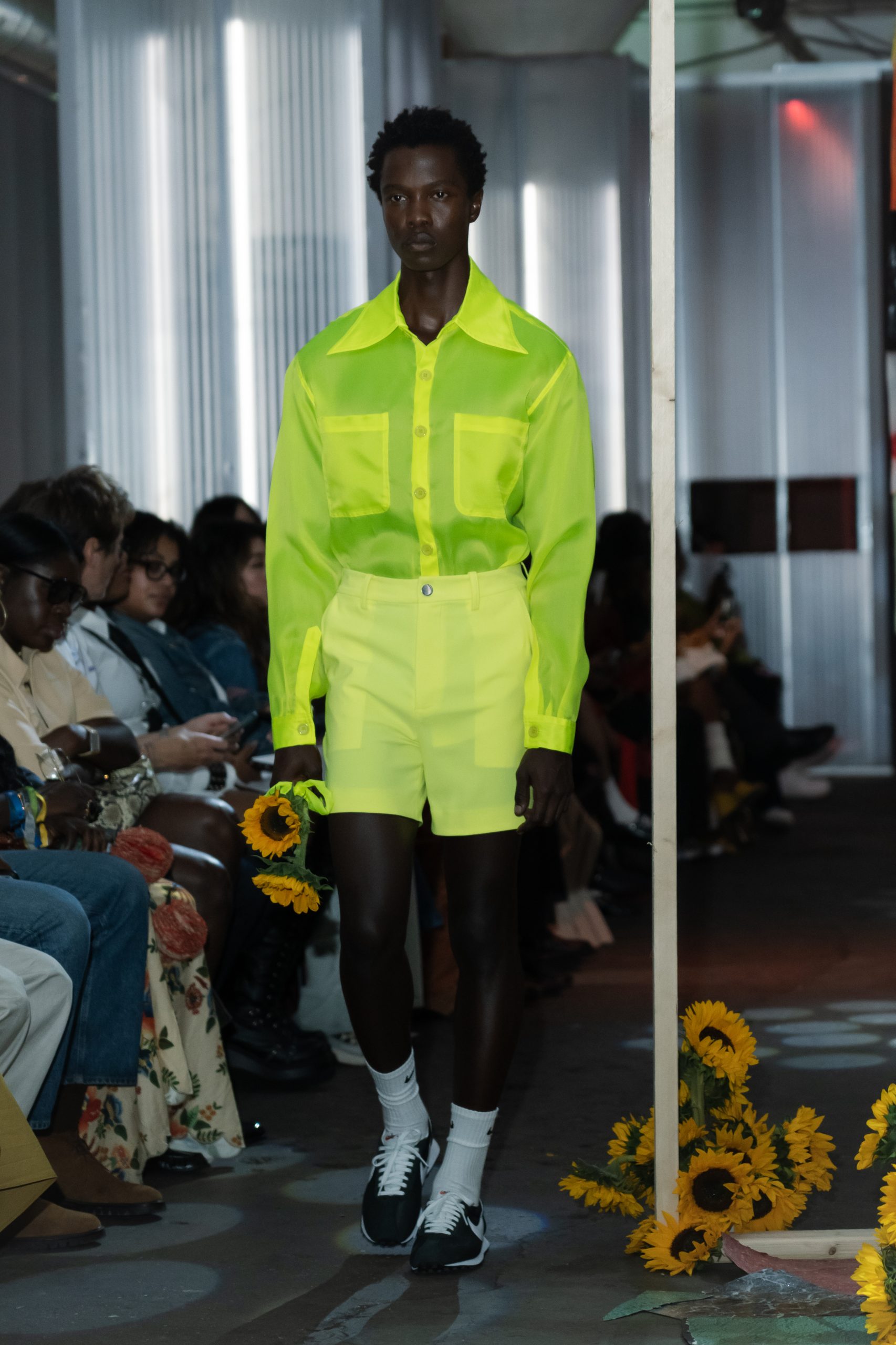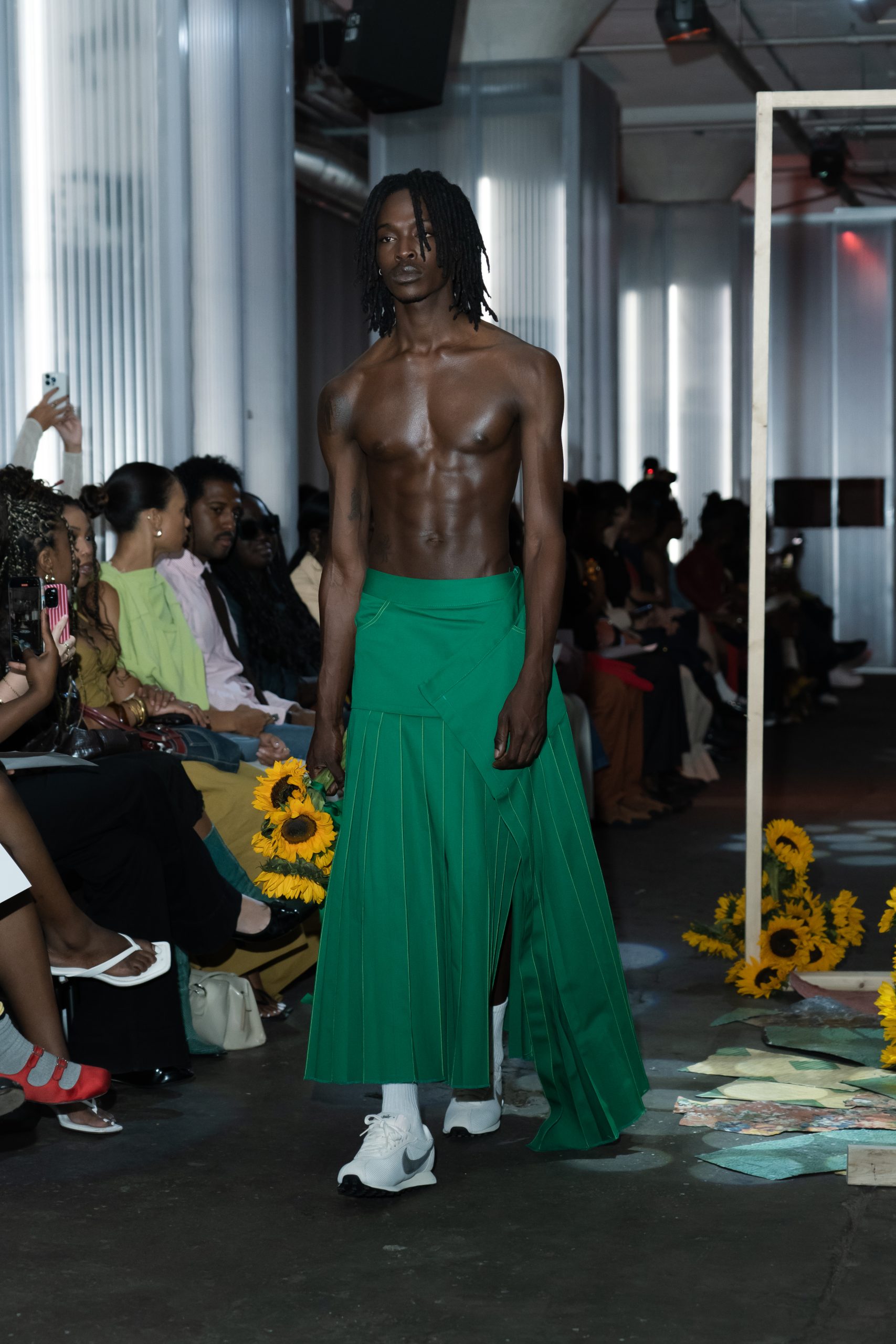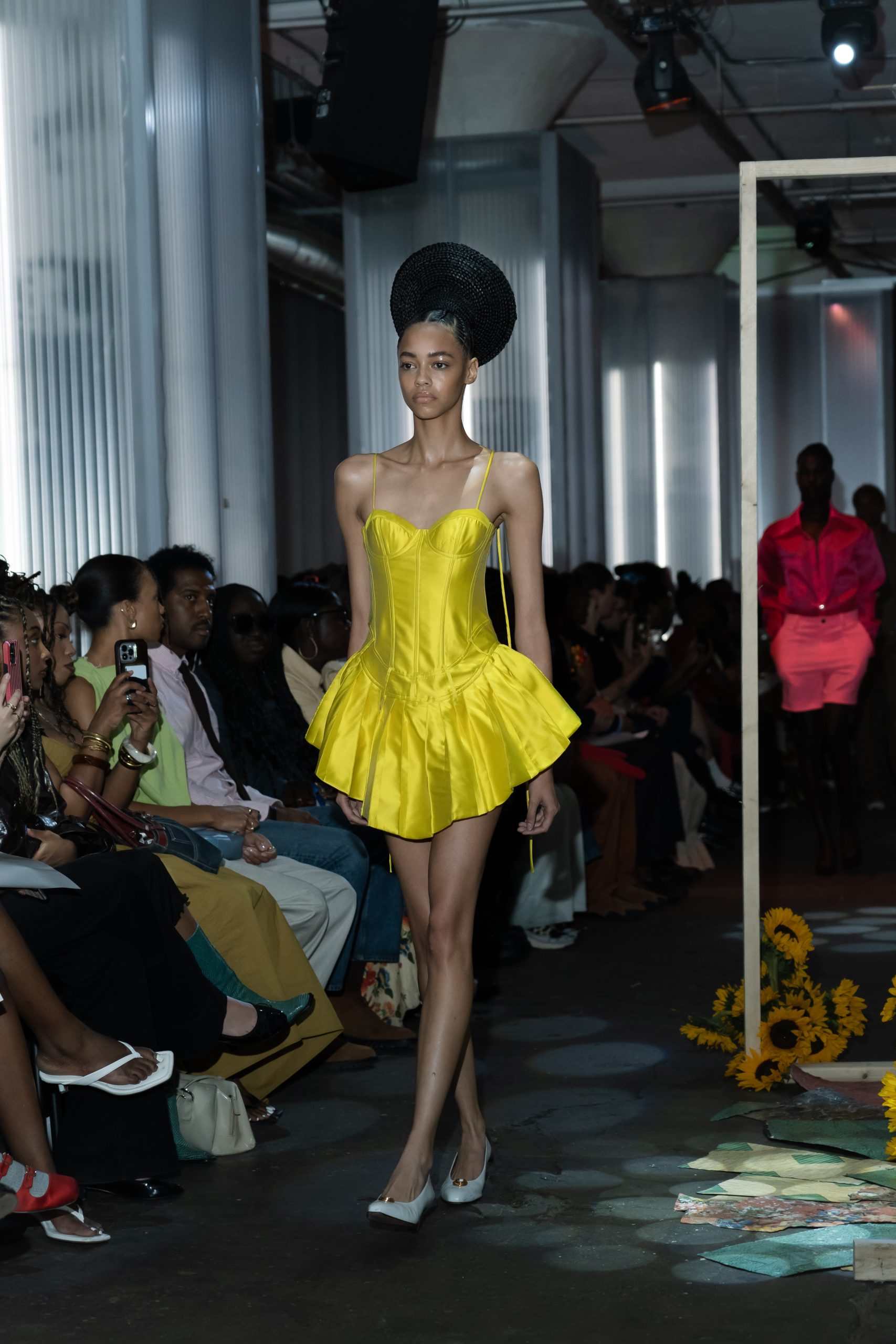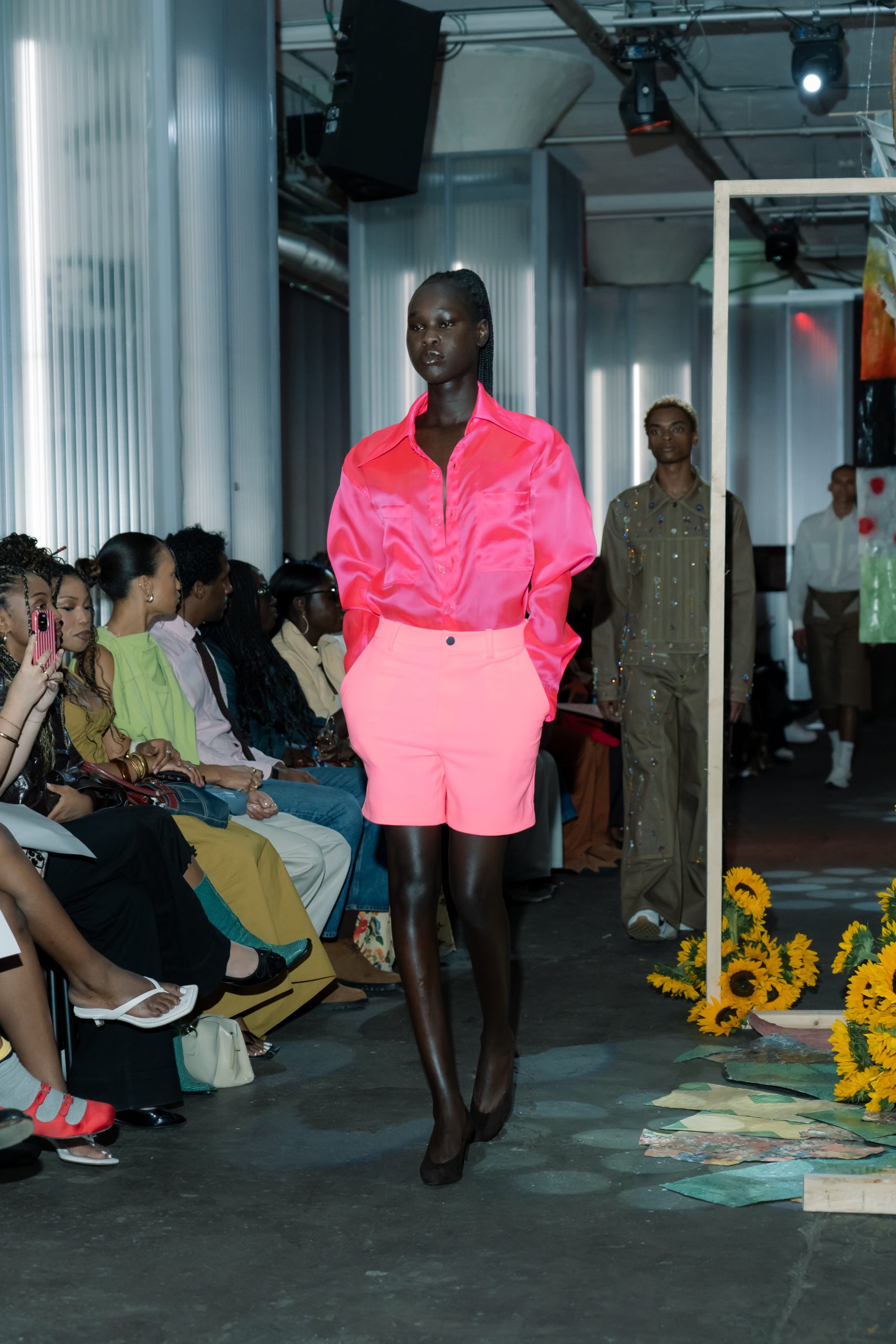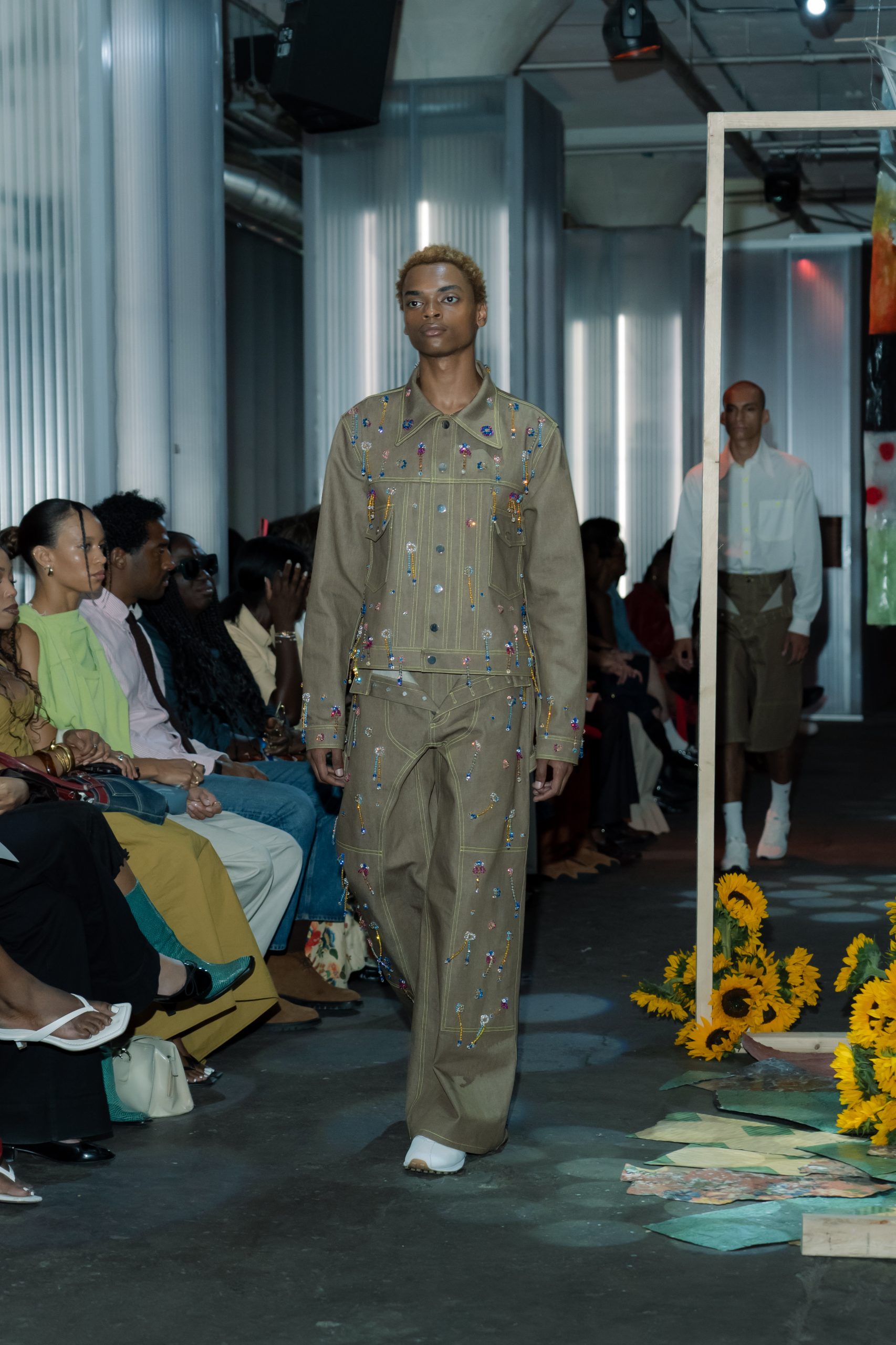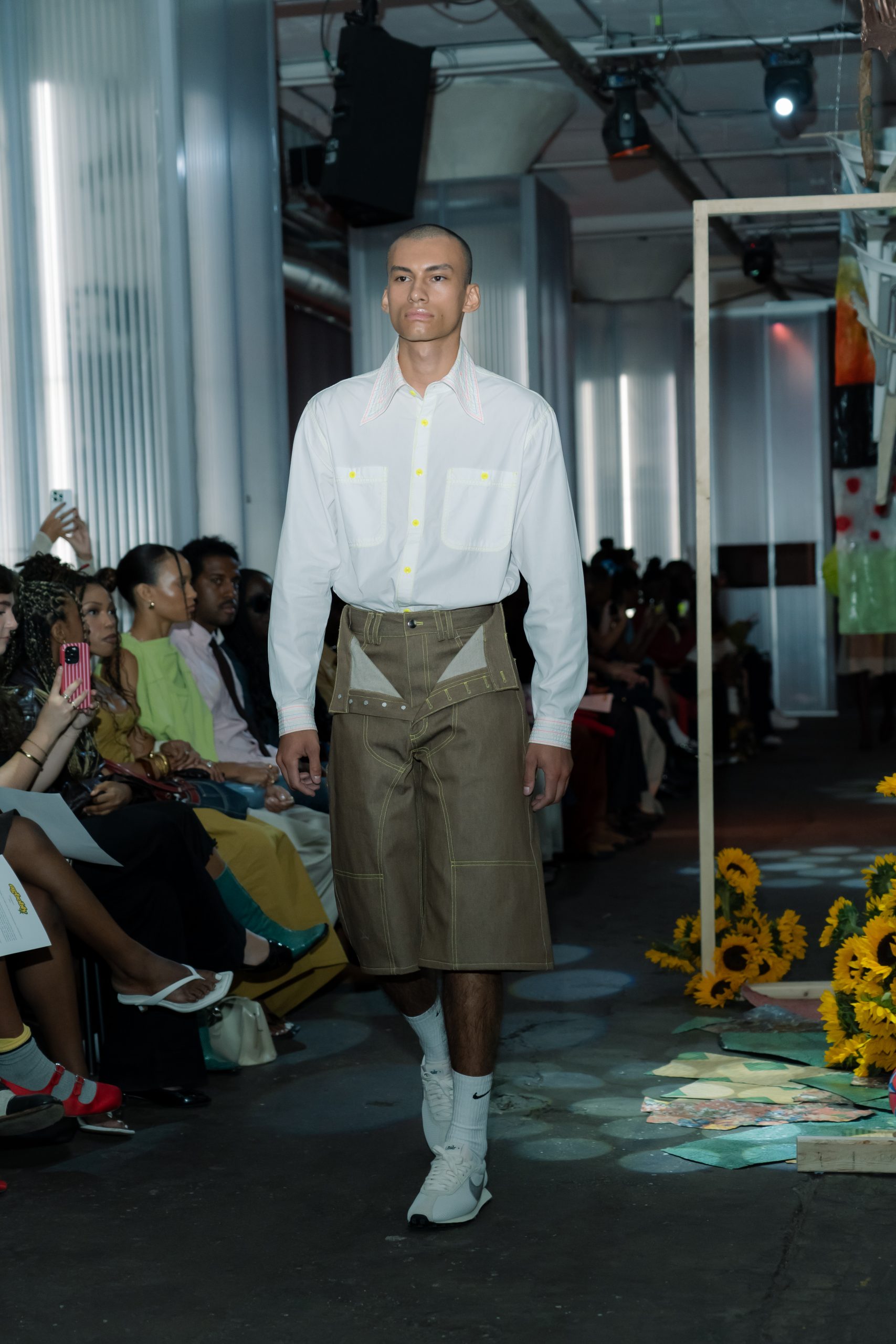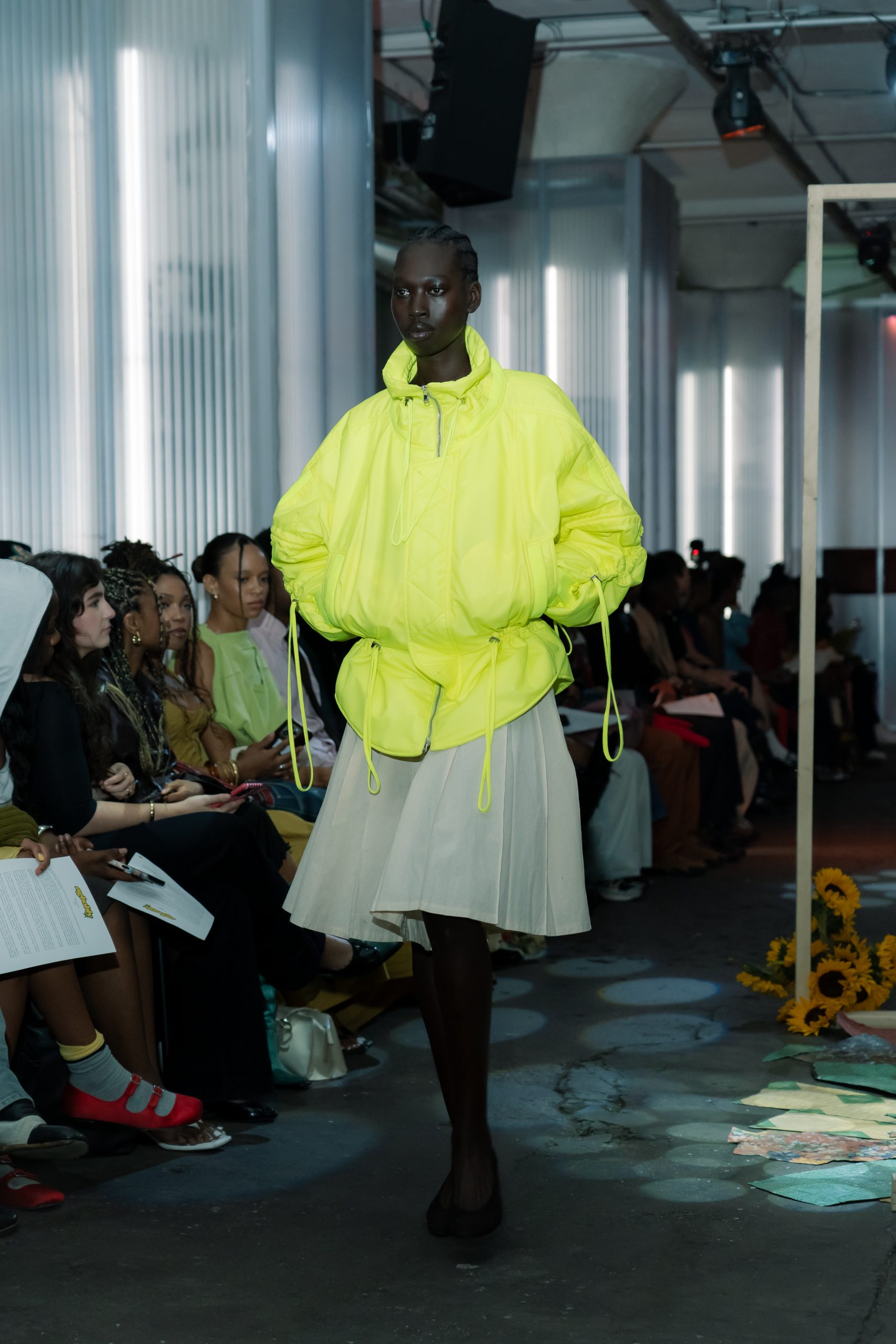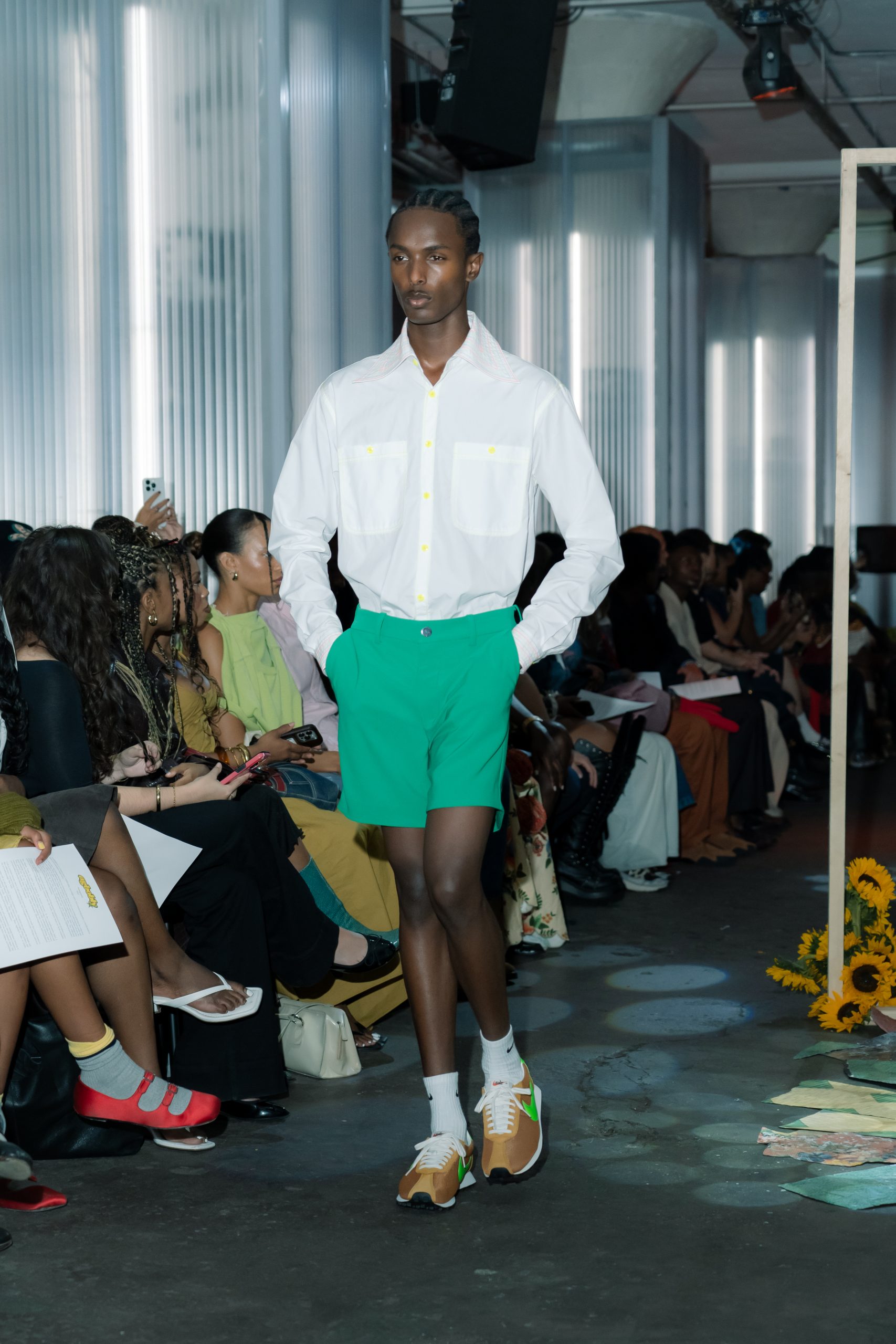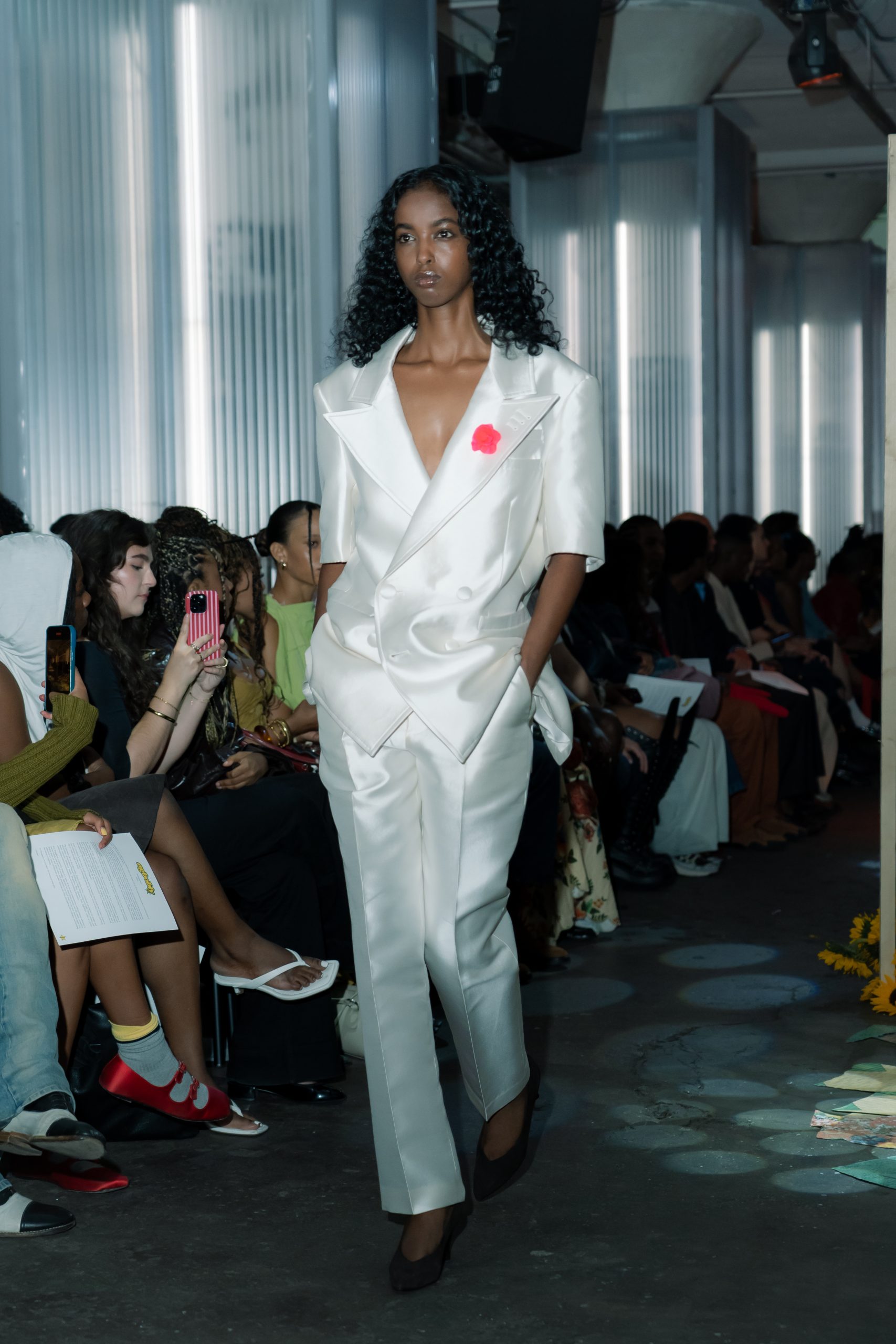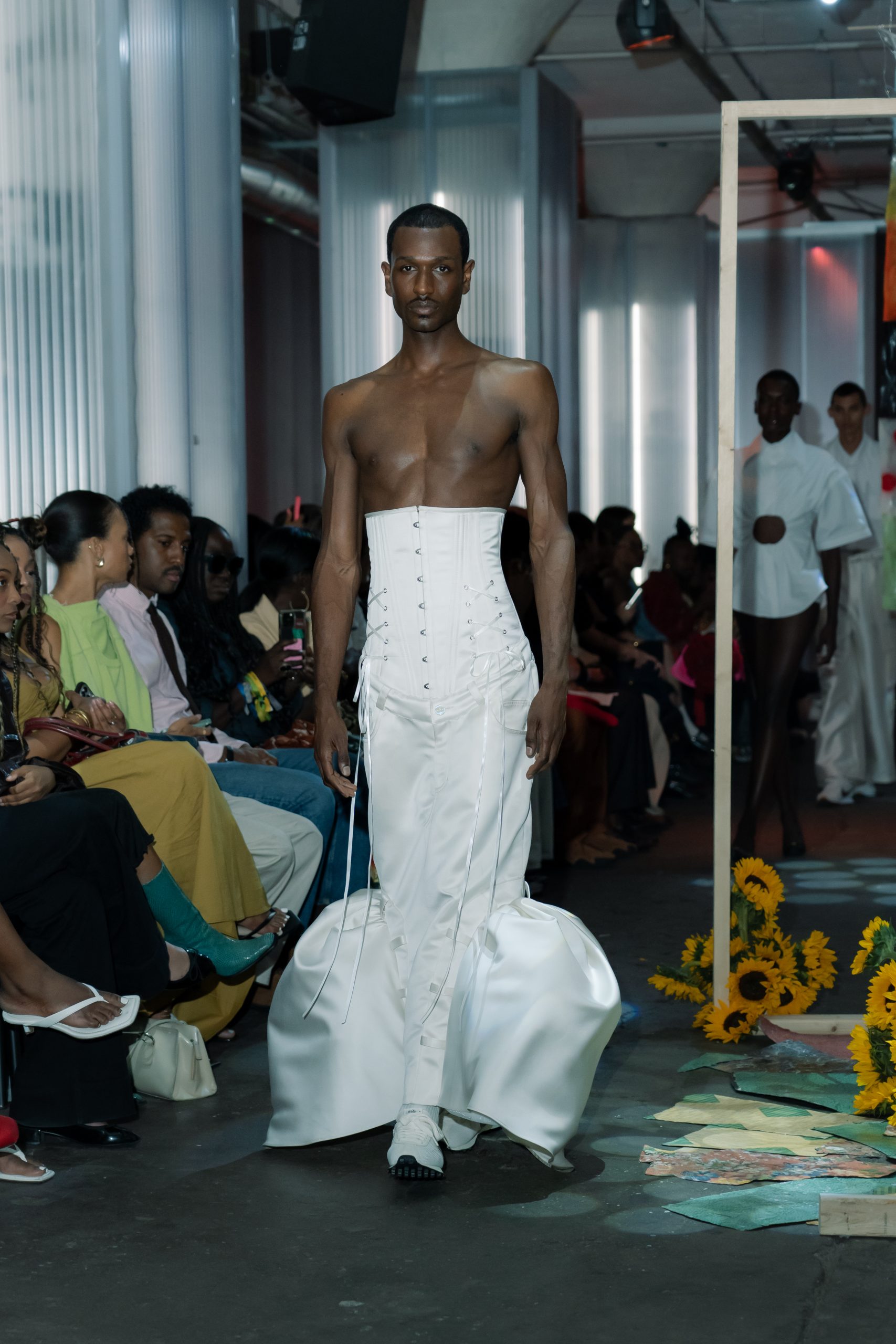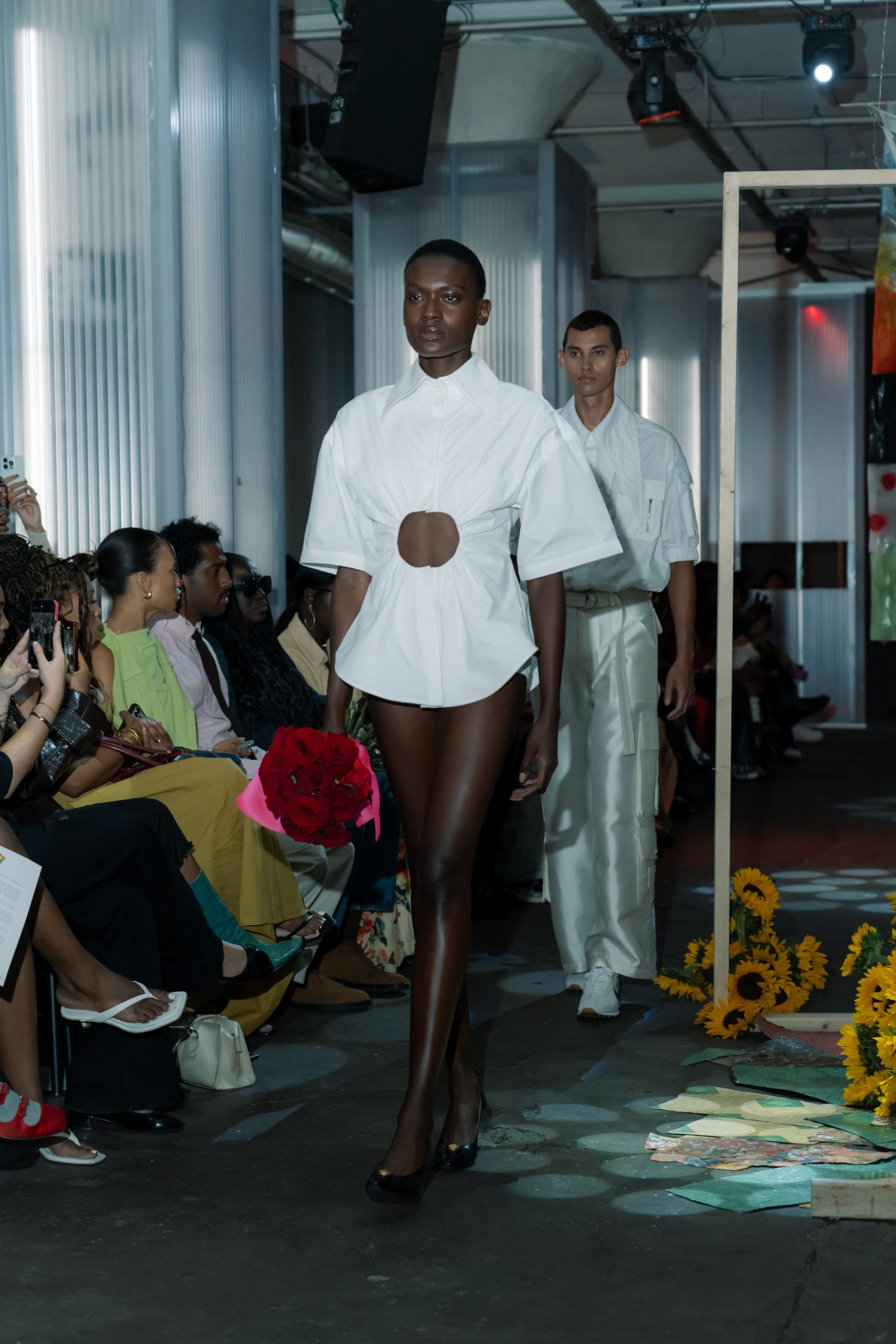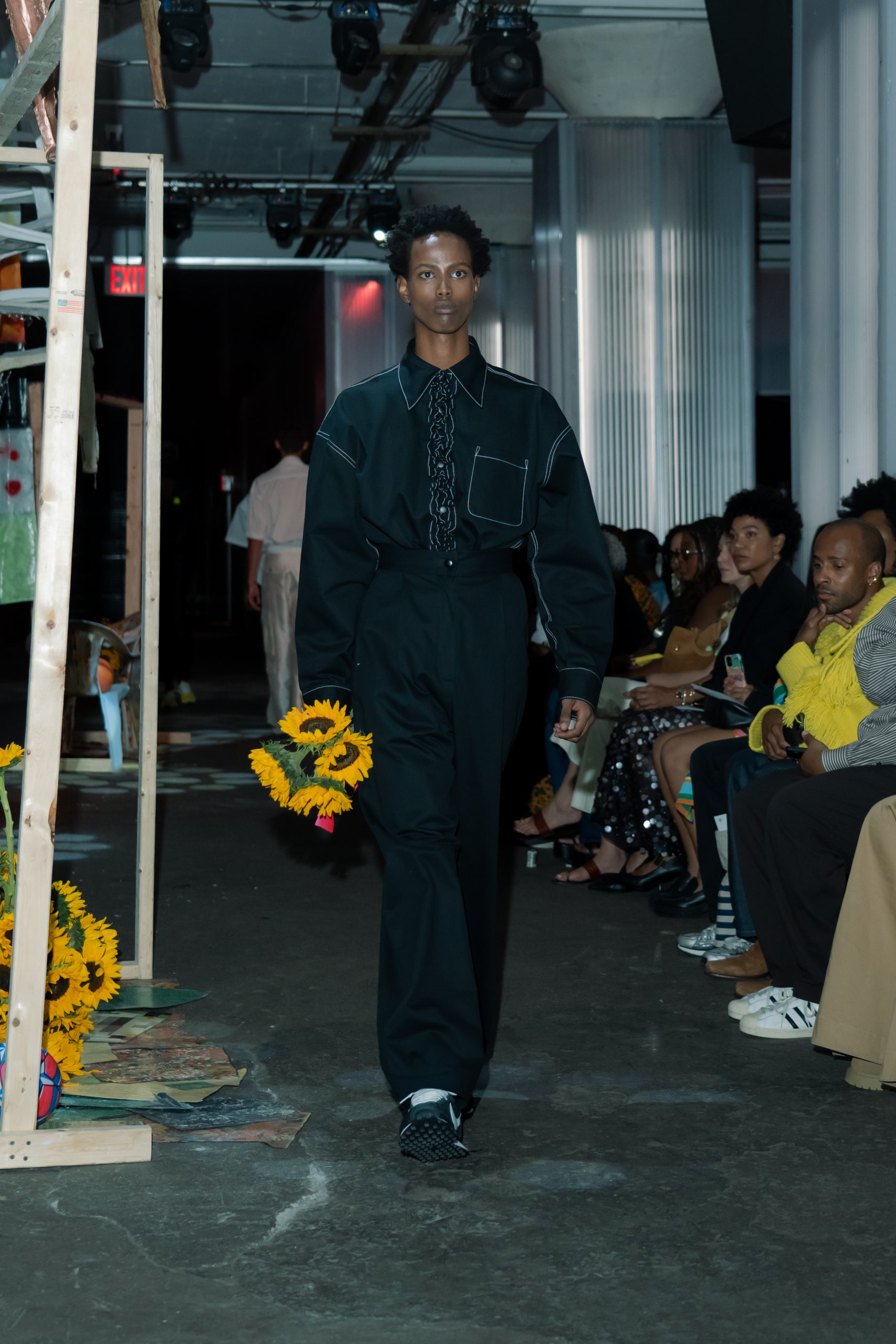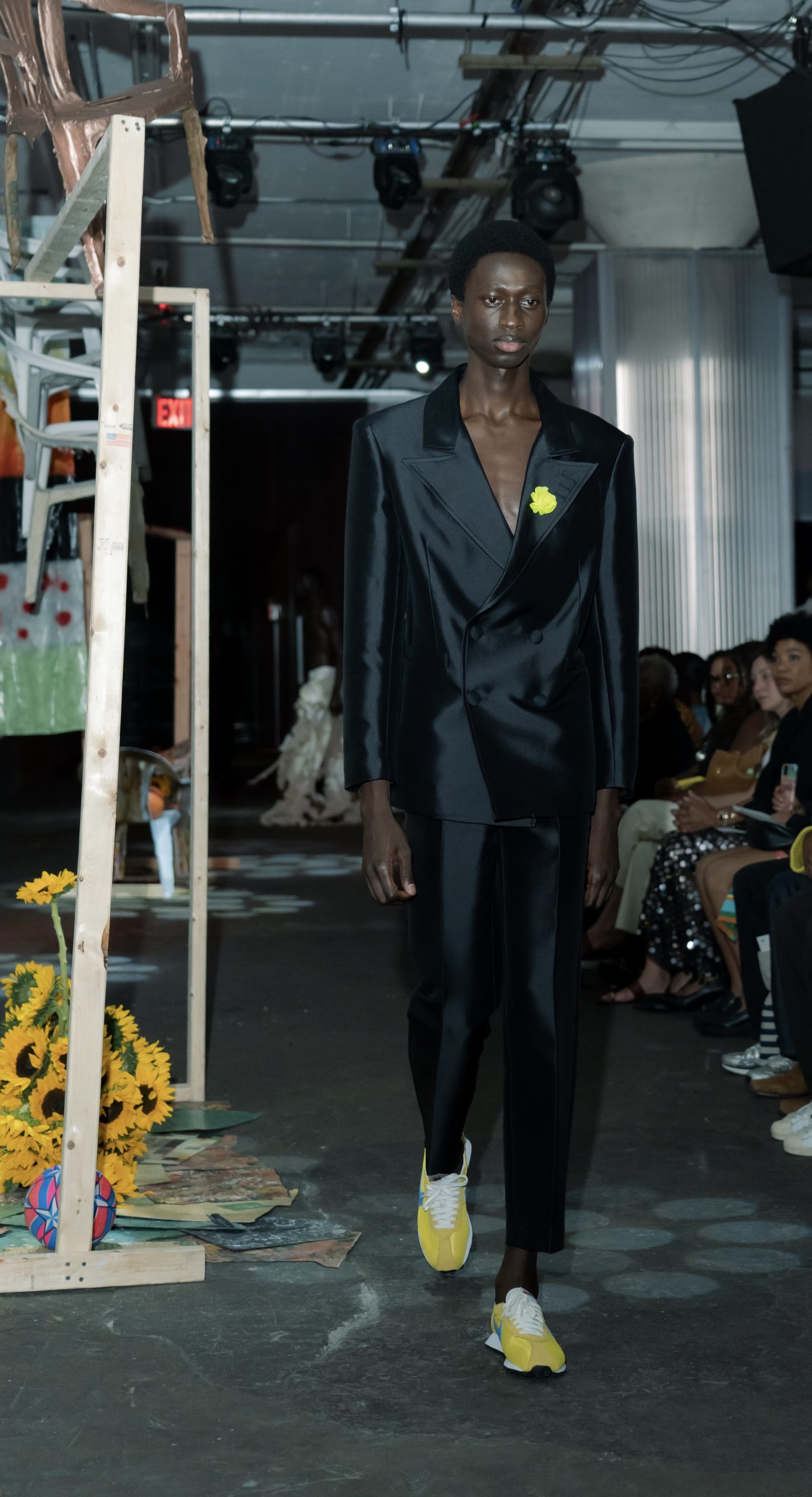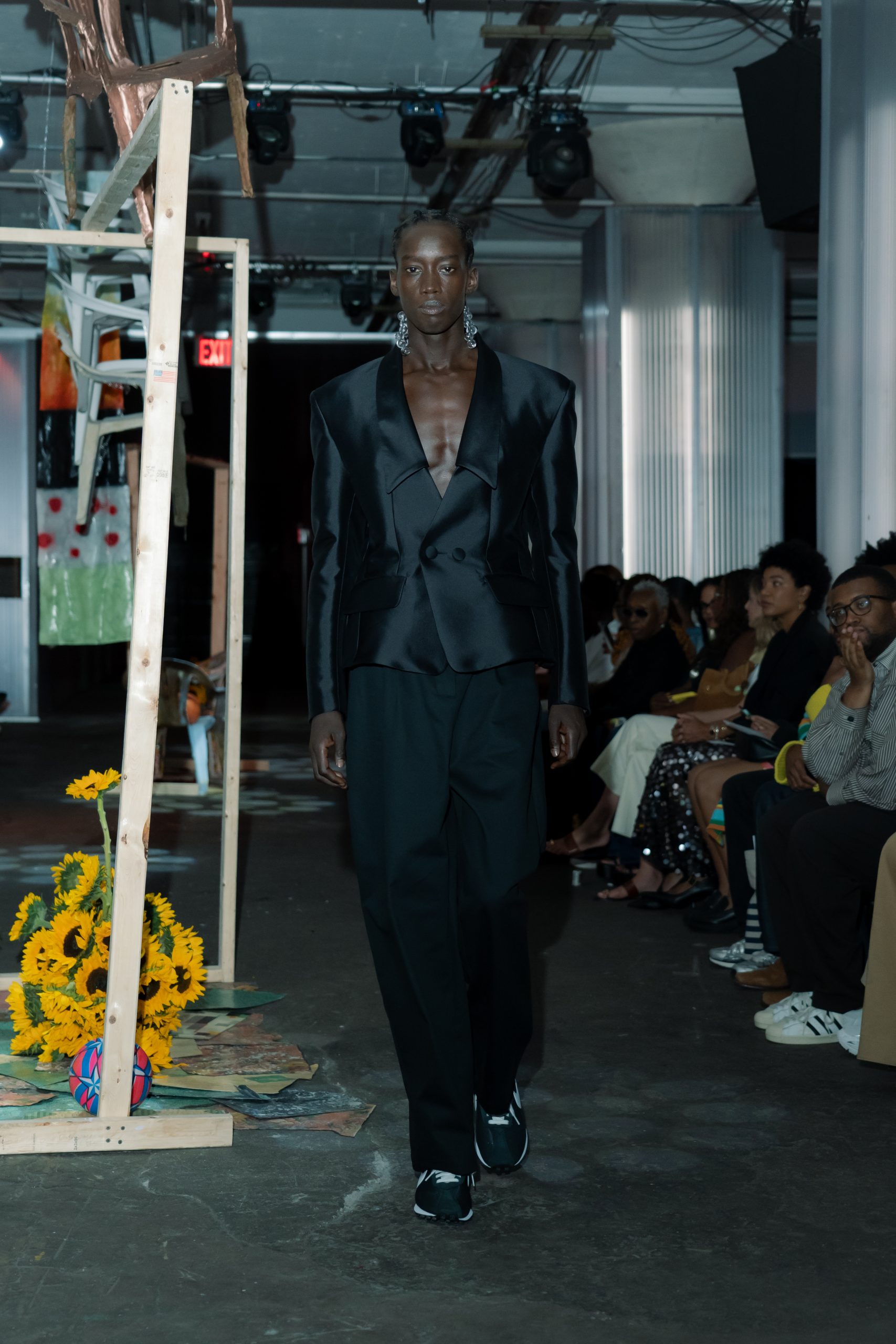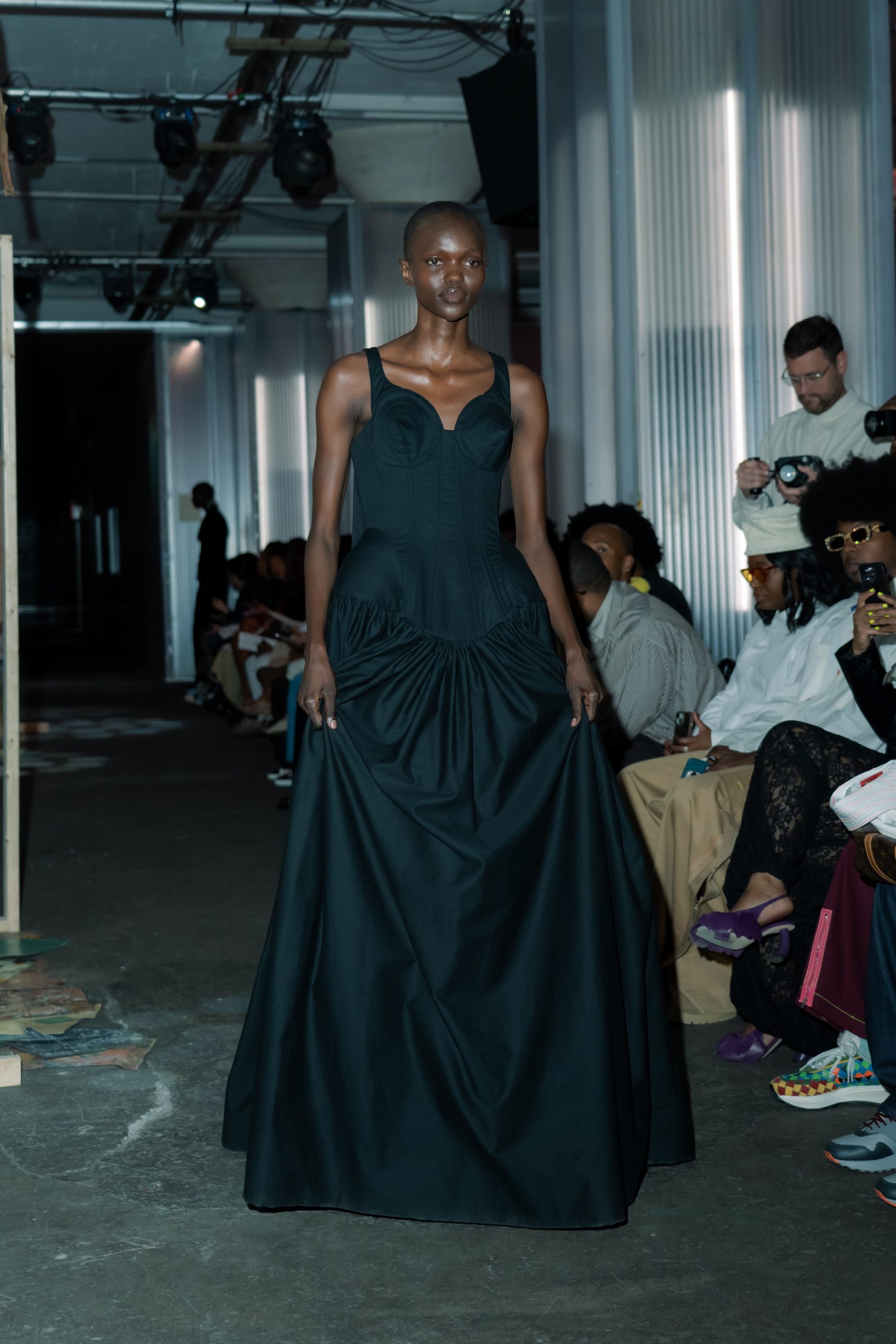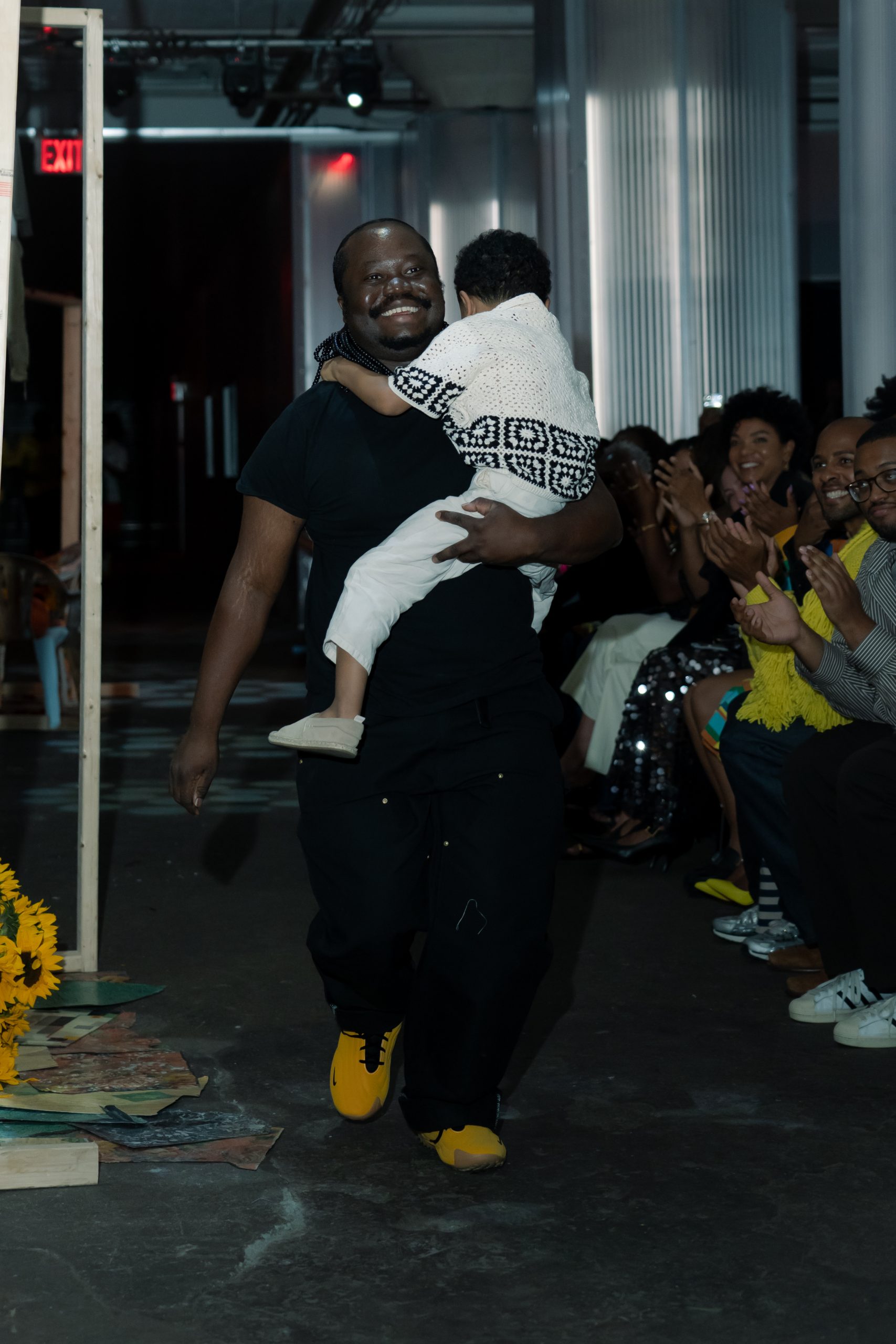
The debut of Jacques Agbobly’s Spring/Summer 2026 collection, Pentagames, is a meditation on memory. Rooted in the designer’s Togolese childhood, the collection channels the innocence of play and the weight of loss, turning lived experience into a fashion language that feels both deeply African and globally resonant.
Born in Togo and raised in Chicago, Agbobly’s life traces a migration of cultures, identities, and aesthetics. His first brush with fashion came at his grandmother’s home in Lomé, where local tailors rented space and transformed vivid fabrics into bespoke garments. As a boy, he found refuge under their cutting tables, absorbing the craft and rhythm of creation.
That instinctive apprenticeship now underpins Agbobly’s eponymous label, launched in 2020. What began as artisanal knitwear has evolved into a ready-to-wear brand, fusing African heritage with contemporary innovation. Recognition from the CFDA/Vogue Fashion Fund, the LVMH Prize, and WWD’s “One to Watch” has cemented his place as one of fashion’s most urgent new voices.
Pentagames emerges from a space where joy and grief collide. The collection is dedicated to Agbobly’s younger brother, lost to violence two years ago. Childhood games in Lomé, including barefoot soccer under flickering lights, mancala carved into the earth, and musical chairs on plastic seats, become symbols of both innocence and survival.
At the heart of the show was Bar Happy Land, his aunt’s Lomé bar, reimagined in collaboration with artist Devin N. Morris. A sculptural landscape of molded West African plastic chairs evoked the fragmented beauty of memory. Ninth birthdays, wakes, funerals, laughter, and loss were layered into a single playing field.
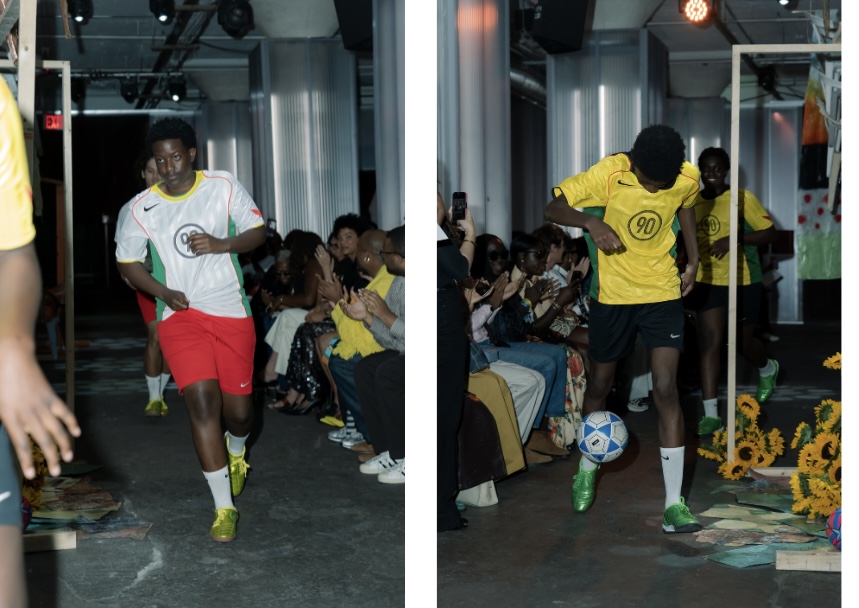
The garments carry this duality. Reworked jerseys channel both sport and ritual. Oversized silhouettes mirror the awkward fit of secondhand abloni clothing that flooded Togo’s markets. Prints and textures nod to games of strategy and chance. Together, they form Agbobly’s distinctive codes of tactile craftsmanship, utilitarian transformation, and storytelling silhouettes.
The runway itself opened with a choreographed soccer sequence by FC Harlem athletes in Nike gear, blurring the line between play, performance, and survival. Each move and countermove reflected Agbobly’s vision of design as a game of rules learned, broken, and remade.

Agbobly’s work insists that luxury is more than craft. It is cultural preservation, activism, and art. In Pentagames, he reframes African childhood memories not as fleeting nostalgia but as enduring codes of resilience and beauty.
“In Pentagames, no one wins,” Agbobly writes. “Yet everyone must play.” It is this insistence, that play, memory, and loss can shape the future of luxury, that places Agbobly among the designers redefining fashion’s global narrative.
Images: Johnny Nguyen @cutakesphotos

Ntokozo Maseko has never been one to wait her turn. At 25, she became the youngest editor in the history of South Africa’s heritage title BONA, steering the four-language magazine into the digital era and winning the title a Thetha Masombuka Award for linguistic excellence along the way. Named one of the Mail & Guardian’s Top 200 Young South Africans, she has since built a 17-year career shaping the voice of iconic brands across luxury, lifestyle, and culture.
Her editorial eye has graced various mastheads; from a legacy print title, an innovative digital magazine to a pan African luxury platform. Today, as inaugural Editor-in-Chief of Robb Report Africa, Ntokozo curates a world where African excellence meets global luxury, telling the stories of the continent’s most remarkable people, places, and creations with precision, wit, and unapologetic style.